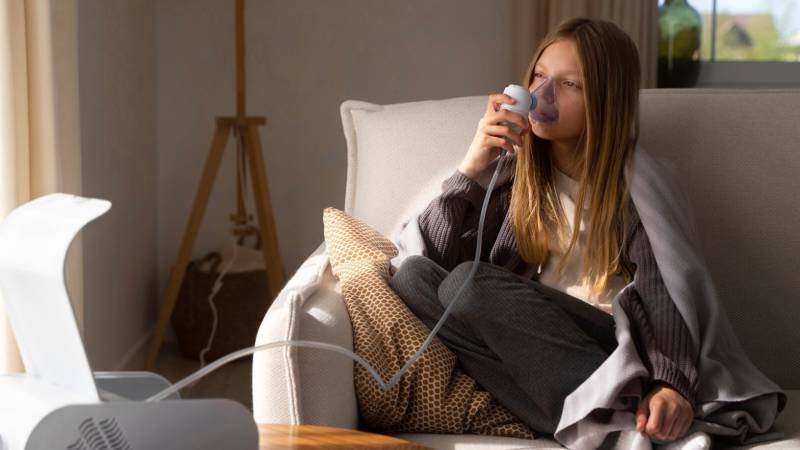
Cleaning your home and washing your bedding often won’t solve your asthma or allergy problems if humidity is high indoors.
In fact, moisture fosters most asthma and allergy triggers: mold, dust mites, and mildew. Running a dehumidifier removes humidity from the air. That can help you breathe easier.
How Humidity Affects Asthma and Allergies
You may notice humidity makes you feel stuffy. That’s because it literally is harder to breathe when the air is moist. Heavy, damp air contains more oxygen particles. Someone with healthy lungs has no problem inhaling that air.
For someone with asthma, each breath can feel like a strain. Breathing humid air can cause coughing, tightness in the chest, wheezing, and shortness of breath.
Another reason humidity can cause problems? It heats up your body temperature. As your body temperature rises you risk dehydration, causing even more uncomfortable symptoms.
The NHS mentioned to us that humidity also causes those hidden allergy triggers to flourish. Dust mites, mold spores, and mildew love moisture. They feed on humidity and grow quickly in damp environments. The more they grow, the more they spread into the air you breathe. All of a sudden you could experience more sneezing, runny nose, itchy eyes, chest tightness, and asthma attacks.
What’s the Ideal Humidity Level?
Aim to keep indoor humidity somewhere between 30 to 50 percent. This range is recommended by the American Academy of Allergy, Asthma and Immunology. Below 30 percent and you risk drying out your air too much. Above 50 percent and allergens spread quickly.
Dust mites are one of the most troublesome household allergens. They can only survive at humidity levels that stay above 50 percent. If you keep your indoor humidity below 50 percent, dust mites slowly die out. After about 5 days without moisture, they dehydrate and die off. You can stop mold from growing by doing the same thing. Within 24 to 48 hours of damp air, mold can start to grow. Without that excess humidity, you stop mold in its tracks.
The Environmental Protection Agency says your indoor relative humidity should not exceed 60 percent. If you keep your humidity between 30-50 percent, you have some room for error.
Do Dehumidifiers Help with Allergies?
Dehumidifiers remove moisture from the air. Let’s break down how that helps.
Essentially, a dehumidifier draws warm air over a cold coil. Moisture from that air falls onto the coil and drips into a tank. Then the dehumidifier redistributes dry air into the room. Within hours, most brands can reduce humidity to a safe level.
Many models also feature built-in humidistats. These sensors measure the room’s humidity level and adjust settings automatically. You choose the desired humidity level, and the machine does the rest. There are even models that include filters to trap dust as they run. If that’s not convenient, we don’t know what is.
What Room Should I Put My Dehumidifier In?
You may need more than one unit to get ideal humidity levels everywhere in your home. The basement is the most common place to start. Basements are damp, dark and often lack proper airflow. These conditions are perfect for mold to grow. Consider a dehumidifier in crawl spaces too.
Other areas to prioritize are bathrooms, kitchens, and laundry rooms. Rooms where you produce steam every day. Even those with severe allergies might benefit from a small dehumidifier in the bedroom. You sleep approximately one-third of your life. If you can keep that air free of triggers while you sleep, it gives your body lots of continuous down-time from allergens.
Dehumidifier vs Air Purifier
Should you buy a dehumidifier or air purifier? Well, that depends. Both target allergens and make your home more comfortable to breathe. But they work in opposite ways.
A dehumidifier removes water from the air. An air purifier catches particles that are already airborne. Dehumidifiers prevent mold and dust mites from thriving. Air purifiers trap allergens that are already in your air.
If you suffer from severe asthma or allergies, run both machines at once. Dehumidifiers keep moisture at bay. Air purifiers with HEPA filters catch allergens already in the air.
Tips for Best Results
Follow these tips and tricks to get the most out of your dehumidifier:
- Purchase a model with a built-in humidistat.
- Get a hygrometer. This handy tool will measure your humidity in real time, so you’ll always know where you stand.
- Keep your dehumidifier clean. Mildew can grow inside your dehumidifier if it isn’t regularly cleaned. Empty the tank frequently and wipe down surfaces.
- Place dehumidifiers in the rooms you spend most time in. Focus on basements, bedrooms, and bathrooms.
- Pair your moisture air cleaner device with a HEPA filter air purifier. Reducing humidity will kill dust mites, but the debris they leave behind can linger on carpet and bedding. An air purifier with a HEPA filter will capture those particles while they’re in the air.
- Don’t open your windows on humid days. Yes, fresh air is good – but not when the air is humid. Cracking open a window lets moisture inside and ruins the dehumidifier’s efforts.
Don’t Believe Everything You’ve Heard
Don’t overdo it with the dehumidifier. Dry air can cause irritation to the throat and nose. It also can worsen coughing. Your goal isn’t to remove all moisture from the air. Keep your humidity between 30-50% percent and you’ll avoid too much humidity or too little.
Remember, a dehumidifier won’t cure your asthma or allergies. But it can help! There’s only been limited studies about dehumidifiers and asthma. Though cutting moisture does limit the growth of allergens in your home.
And keep taking your allergy and asthma medication as prescribed by your doctor. Dehumidifiers are not a replacement for medicine. They may help lessen your symptoms and make your home a safer place to breathe.
Case Study: Dust Mites and Allergies in Bedroom are Controlled with Humidity Management
A homeowner in Nottingham noticed they were suffering from allergy symptoms including sneezing, itchy eyes, and congestion at night. They spend most of their time in their bedroom, so they assumed their allergy symptoms were caused by something in their bedroom.
One easy way to check for indoor air quality problems is to look at humidity levels. When measuring average relative humidity in their bedroom, they noticed humidity levels were around 68% due to lack of ventilation and nightly accumulation of moisture from breathing and bathroom steam.
High humidity levels can promote allergens like dust mites and mold. This Nottingham homeowner decided to place a portable bedroom dehumidifier in their room, along with a hygrometer to keep an eye on humidity. After setting the humidity control on the dehumidifier to shut off at 40% RH-45% RH, they sealed their mattress with dust-mite proof covers and began washing all bedding weekly in hot water.
After keeping their bedroom under lower humidity conditions for several weeks, the humidity level remained consistent at 42–45% RH. Dust mites began to die off and the homeowner noticed significant relief from allergy symptoms at night and was able to sleep through the night. The homeowner still needs allergy medicine, but can sleep better knowing they’ve reduced allergens in their bedroom.
As you can see from this case study, many asthma and allergy triggers can be controlled with proper humidity levels. Dust mites and mold are two of the most common offenders.
Read about humidity and controlling allergies from the EPA: https://www.researchgate.net/publication/32886703_The_Nottingham_energy_health_and_housing_study_reducing_relative_humidity_dust_mites_and_asthma
Humidity and Allergies FAQs
Can I help alleviate asthma and allergy symptoms with a dehumidifier?
Indoor dehumidifiers help reduce moisture in the air which limits the growth of mold, mildew, and dust mites. Dust mites are tiny bugs that thrive in mattresses, pillows and carpeting, and are one of the most common asthma and allergy triggers.
What’s the ideal humidity level for my allergies?
While the ideal indoor humidity level really comes down to your personal comfort, most experts agree that keeping indoor humidity between 30% and 50% relative humidity provides optimal comfort and limits the growth of allergens.
What room should I put my dehumidifier in if I have allergies?
Basement rooms are commonly affected by moisture, as are bedrooms, bathrooms, and laundry rooms.
Should I run an air purifier with my dehumidifier?
An air purifier with a HEPA filter works in conjunction with a dehumidifier. While a dehumidifier prevents allergens like dust mites and mold from multiplying in your home, an air purifier captures the particles that are already there.
Should I stop taking allergy medicine if I get a dehumidifier?
Absolutely not! Unless you consult your doctor, you should never alter your prescribed treatment plans. A dehumidifier is not medicine, but can help improve your indoor air quality.
How soon will I start to see results with a dehumidifier?
Depending on the condition of your home, you may notice a difference in humidity levels within hours or days. However, if you are trying to reduce dust mites, mold or other allergens you may not see results for several weeks.
Final Words
Higher humidity levels mean more allergy and asthma triggers in your home. Dust mites, mold, and mildew need humidity to grow. Dehumidifiers remove that extra moisture. Dehumidifiers make your home a less inviting place for those triggers. Less moisture means fewer asthma and allergy triggers. Buy a dehumidifier and start clearing the air today.