
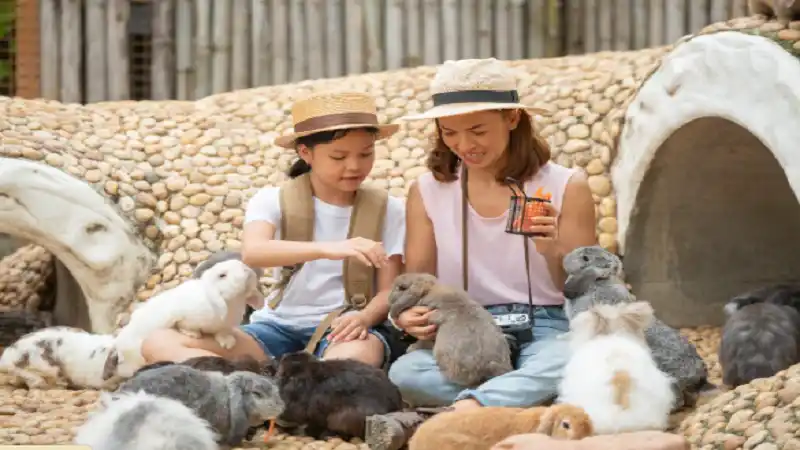
When a child has a direct experience with an animal, they relate differently to the content of books, they listen better, and the evidence seems to stick better in their memories. It’s not just anecdotal. Studies and researchers have long since known that the multisensory experience of interacting with a living being bonds information to us much more tightly than reading it alone – even more so than seeing a video of the same animal.
The problem with passive learning
Schools usually focus on transferring information. For example, the teacher explains what a mammal is, and the child writes it down. The information is transferred easily, but unfortunately, it is also easily forgotten.
Experiential learning functions in the opposite way. If a child hears a zookeeper talking about the diet of an animal while the animal is in front of them and eating its food, their brain is automatically processing information through different channels such as sight, hearing, and even emotions. This type of learning creates what researchers refer to as a “flashbulb” effect. The information sticks because it is connected to something powerful or emotional.
That’s why learning about new animals is usually more effective than watching documentaries. Take the capybara for example, which is the world’s largest rodent. It’s not that exciting on paper, right? But when you watch how a capybara interacts within its social group, and learn that they are highly social and exist in hierarchical herds, the simple fact turns into a fascinating story. And that’s when the questions start rolling in, which is the perfect start for effective learning.
What a good encounter actually teaches
There’s a difference between animal tourism and animal education, and the difference is in the bones of it.
A well-designed encounter does more than put children in the presence of something cool. It teaches the “look but don’t disturb” lesson, introducing kids to the fact that wildlife has its own requirements, space, and limitations. Children learn to recognize cues from the animals, to step back when necessary, and to follow the lead of more informed caretakers. This is a lesson in empathy, and it tends to stick. A child who learns to appreciate an animal’s need for peace and quiet will also apply the same logic to other animals, including people.
Good encounters also relate back to general topics in an obvious way. South American animals like capybaras and tapirs are a natural introduction to discussions on loss of natural habitat, semi-aquatic environments, and the marine life that helps maintain healthy rivers. These are all STEM-based topics that seem more appealing when they come through the door children want to use. If you’re interested in viewing how these type of conversations usually begin, Book a capybara feeding experience and observe the questions generated by the child in front of a live animal.
From fear to curiosity
Many children come to animal encounters with a predisposed fear. Mice, snakes, spiders – these are some examples of creatures they fear even before encountering them. However, with a structured experience at a facility with professional handlers, these fears can be quickly brushed away.
It’s not difficult. A child witnesses an adult handler standing near an animal the child thought was scary, and senses the handler’s calm attitude. The child is then invited to look closely – touching is not usually necessary. More often than not, fear gives into fascination, and the creature ceases to be feared.
The results are long lasting. A child that is unafraid of strange animals is more likely to grow into an adult that is concerned with conservation. Many visitors to zoos and aquariums reported that a visit to an accredited zoo or aquarium prompted them to consider their personal responsibility toward the environment. Introducing children to animals before they have fully formed their opinions on the environment is the best way to ensure we have a future generation that is concerned with biodiversity.
Making it more than a day out
The term family day out generally conjures images of fun. And these trips should be fun – that’s not an issue to resolve. But there’s no reason a fun day can’t engage with something deeper that lasts.
It’s all about before and after. Prompting kids to think about what they know or believe about a species before they go, then returning to that question after the visit, creates a long-term experience. Zoo keepers and animal educators are experts in helping children drive their own learning experience. They’re not there to talk at kids – they’re there to respond to the questions children have when they’re really interested.
The same is true of later conversations. A child who has just had the experience of tentatively holding out a palm of feed to an animal that came up and looked them in the eye is a child ready to engage. That’s the time for the deeper conversation about where it lives, what counts as a threat to its habitat, and what even the word “conservation” really means in concrete terms the child has seen, not just abstractly heard of.
Giving nature a fighting chance
Screens can expose children to capybara herds moving through wetlands in the Amazon basin, beautifully lit and scientifically accurate. What screens can’t do is let a child feel the weight of something real and alive.
The surest way to make environmental stewardship real and personal rather than abstract and distant is occasional unhurried contact with the more-than-human world. The classroom doesn’t have to compete with that – just send children out to experience it.