
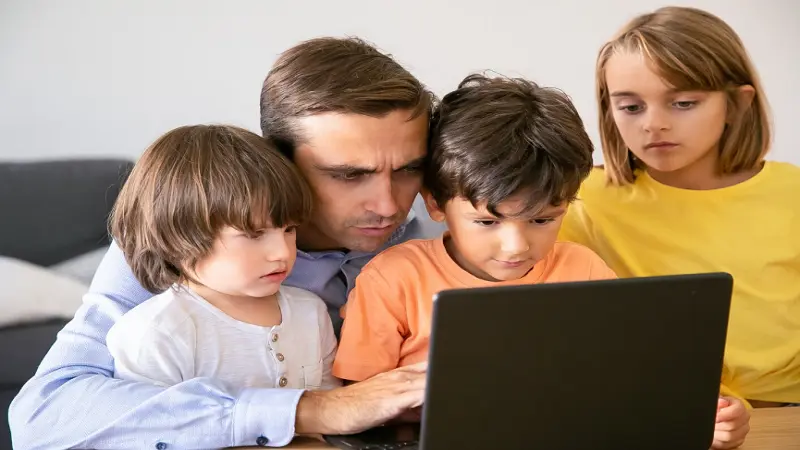
Online playing is now one of the major parts of children’s lives. Kids take their tablets, smartphones, and gaming consoles not only to play but also to socialize, create new friendships, and express themselves. Although these virtual worlds provide creativity and connection, they have some risks which are not very obvious to the parents at the first glance. Knowing how to identify the first signs can help the families to be always ahead of the problems before they become serious ones.
Kids do not always recognize safe or moral conduct online, and a lot of them keep silent when they feel uncomfortable and don’t tell adults. That is the reason why having open talks and being aware of signs can totally change the situation. Instead of being afraid of online gaming, this manual suggests that parents should be aware of it, watch their children calmly, and give them support in advance.
Understanding How Kids Engage in Online Worlds
Children are not playing, but they are members of online communities. Most of the new games have chat features, friend requests, user-created content, and virtual interaction, which in some cases may resemble social interaction in the real life. Players of young age are only learning how to cross boundaries, communicate effectively, and know when something is dangerous.
It does not require parents to be experts when it comes to gaming. Some minutes of gameplay, whether you are watching it or sitting next to your child can give invaluable insights. In many cases, it is more significant to listen to your child discussing his or her online friends or playing life online than to be aware of the rules of each game.
Early Warning Signs Parents Should Notice
Not all red flags are glaring. In some cases, they are your child’s behavior or even the change of their attitude towards specific games. If your child is suddenly refusing to play a favorite game, is secretive about chats, or shows weird moods after getting off, then in all likelihood, something is not right.
Furthermore, signs that children could be frequently hearing offensive language, getting in contact with older players, or receiving the offer to go to the external messenger for chatting. Although these situations do not necessarily lead to serious harm, it is always a good idea to respond by some gentle questions and keep an eye on them.
The Hidden Risks of User-Generated Games
Huge number of online games which are playable are giving players the permission to make the content by themselves, build some virtual spaces, or communicate with open-world environments. These tricks can motivate creativity, but simultaneously, they come with the new elements that cannot be predicted. Some games do have a structure where the community is in charge of the moderation so it is possible that there could be some instances of inappropriate content or unsafe interactions that are going to be found among the few that have gone through.
While kids dive into user-generated content, it is necessary to make sure that they are dealing with age-appropriate material. Helping parental controls to work, checking settings, and sometimes looking at the kinds of rooms or servers they are visiting can be beneficial in ensuring that they are in safer places.
When Online Games Cause Bigger Safety Issues
There are some instances that are not just small problems but actually make us question if a game is giving adequate safety to its young users. A number of platforms have been put under the microscope following the disclosures of incidents which involve the wrong or harmful type of interaction that agitates children. As a result, families have turned their eyes to such kind of stories more and more and, particularly, in those games which children frequently use.
This is where context matters. When a couple of parents raised concerns about Roblox’s safety, it brought digital boundaries and supervision to the forefront of the rest of the nation. These examples shouldn’t frighten families, but they highlight the real need for awareness as children navigate virtual spaces.
Helping Kids Build Strong Digital Boundaries
It is not only about Internet protection but also about educating the kids to be able to make wise choices that are independent and wise. It is advisable to make children stop and think before accepting friend requests, joining private servers or responding to strangers to create healthy digital behaviors. Teaching them on how to deal with embarrassing situations also helps children to get assistance without the fear of being punished.
These discussions are effective when they are not authoritative. Children will feel comfortable enough to open up as long as they are certain that parents will listen without taking away the things they like at once. A positive conversation eases their mentioning of something about it before it becomes out of hand.
Setting Up Game Settings That Support Safety
The parental controls, privacy options, and customization settings have become the new features of the majority of big games aimed at restricting undesired interactions. These features can be adjusted to minimise occurrence of unsafe situations. This can be age filters, chat blocks, friend request blocks or capping in-game purchases.
Replaying these settings every now and then can prove useful since the game is updated or your child may age. To ensure that all is still within the age and maturity of their child, families find it convenient to schedule their tech check-in after every few months.
Encouraging Open Communication at Home
A home set up where children feel free to share online experiences is one of the most powerful tools that parents can use. Open-ended questions such as, What did you play today? or Did something surprise you when you played your game? encourage the children to speak.
In case a child shows bewilderment or unease regarding an interaction, react with a composed curiosity. It is even better when something is alarming because you should remain steady so that your child can feel safe enough to continue talking. This creates an opportunity to lead them through the experience and positive decision-making.
Balancing Supervision Without Invading Privacy
As children get older, they always desire to be more independent. Luckily, it does not always need hovering to supervise. The parents can keep up by looking at the chat histories jointly, by examining the games their child has downloaded, or by mutually agreed upon limits to online activity.
This balance will make the kids feel accepted and encouraged. They get to know that internet security is a collective responsibility and not a group of regulations to curtail their entertainment.
Supporting Children Emotionally Through Online Experiences
Children can find the online interactions as emotionally real as the face-to-face interactions. Their self-esteem can be affected or they may be stressed as a result of negative remarks, exclusion or situations that are confusing. Emotional support as you would give them after a bad day at school, enables the kids to work with these emotions constructively.
Consistent discussions on how to be kind, empathetic and digital citizens are used to steer children in making good decisions in the internet. By making emotion-discussion normal in families, children will feel more encouraged to raise their voices when something fails to be okay.
Creating a Family Plan for Online Gaming
It is a good thing to have a family gaming plan. This may involve having time restrictions on a daily basis, the type of games to be played or where to use devices at home. These guidelines provide a sense of uniformity and promote a more healthy online behavior.
The involvement of kids in the plan-making process inculcates accountability and agency. Children are best behaved when they participate in the formulation of rules, they tend to adhere to them, and know their point of purpose.
Conclusion
Online games may be a great entertainment, creativity, and connection source among children. Through the appropriate education and enabling discussions, the families can make kids enjoy these digital spaces in a secure manner. Being able to understand the warning signs at an early stage, steering children through their online experience, and being active participants in their gaming life environment will ensure that the minor concerns do not grow into the bigger issues.
Through trust and open communication with moderation of supervision, parents can help their children to experience online games with confidence and strength. Digital safety is not about being afraid, it is about creating educated and considerate young players, who understand how to take care of themselves and find assistance when they should.